Burns, Bleeding and Motorcycle Helmets: First Aid at a Road Incident
A first aid question about severe burns is one of the fastest rising theory test searches this week. Here is what the Highway Code says to do at an incident, from making it safe to burns, bleeding and helmets.

One of the fastest rising theory test searches in the UK this week is a full question stem: at an incident, someone is suffering from severe burns, how could you help them? First aid questions tend to cause more doubt than they should, partly because people half-remember advice from films and old wives' tales. The Highway Code's first aid annex is short, clear and worth reading once properly. This post walks through it in the order you would actually use it.
Step one: make it safe
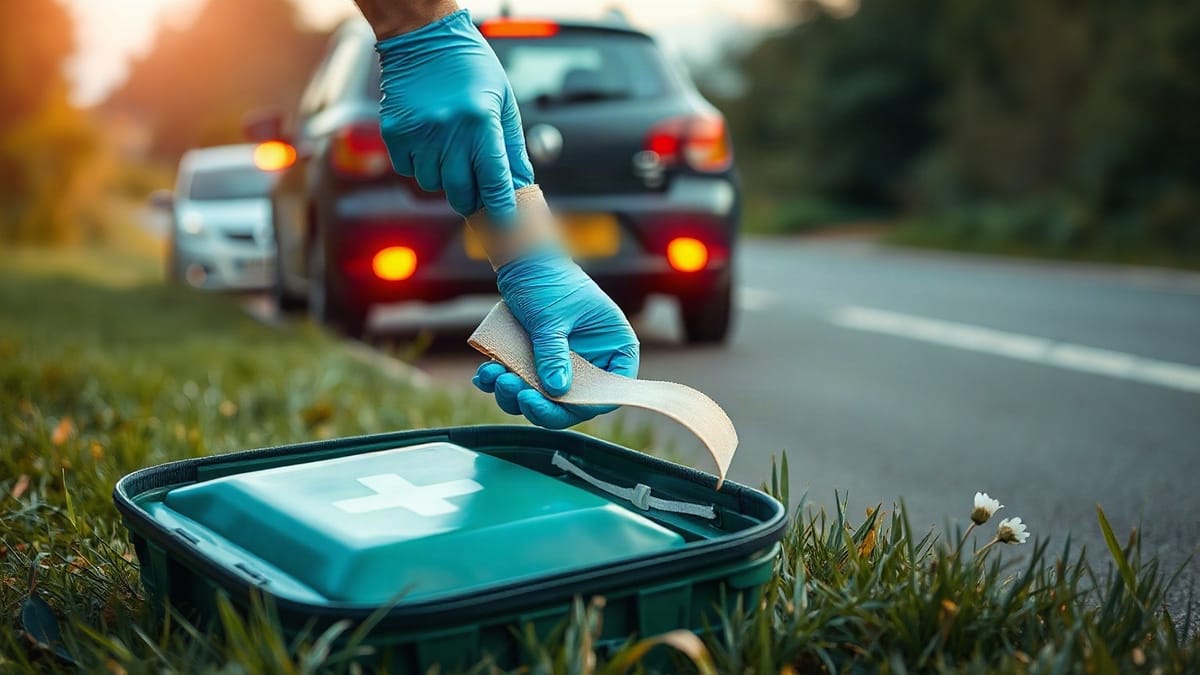
Annex 7 of the Highway Code says the main dangers after a crash are further collisions and fire. Watch out for spilt oil and broken glass as you approach. Switch off engines if you can, warn other traffic, and put your own hazard lights on. Stop anyone from smoking, and put on gloves from a first aid kit if you have one.
This order matters in the exam. Several questions describe a scene and ask what you should do first. The answer is nearly always about danger before treatment, because one casualty can quickly become several.
Step two: get help
Call 999 or 112 as soon as possible, and ask bystanders to help if it is safe. The annex says to give the exact location, the direction of traffic and how many vehicles are involved, and to describe the casualties: trouble breathing, heavy bleeding, someone trapped, or someone not responding.
Step three: look after the people involved
Do not move casualties out of their vehicles unless there is a threat of further danger. Do not remove a motorcyclist's helmet unless it is essential. Keep people warm, dry and comfortable, reassure them, do not leave them alone or let them wander into traffic, and do not give them anything to eat or drink.
The helmet point is the one learners get wrong most, usually because pulling it off feels like the helpful thing to do. The annex is clear that it should stay on unless it is essential to remove it.
Burns: cool it for 20 minutes
Here is the answer to this week's trending question. The annex says to put out any flames, taking care of your own safety, then cool the burn for at least 20 minutes with plenty of clean, cool water. Cover it with cling film if you have it. Do not try to remove anything stuck to the burn.
Twenty minutes is longer than most people expect, and that is the point being tested. In the exam, look for the option that involves cooling with water. Options involving creams, butter or peeling away clothing stuck to the skin are traps.
Bleeding and the DRABC checks
The annex sets out the checks as Danger, Response, Airway, Breathing and Circulation. If a casualty is responsive and breathing, check for bleeding. Protect yourself from blood, and check for anything such as glass in the wound. Do not remove an embedded object; build up padding on either side of it instead. If nothing is embedded, apply firm pressure over the wound, then secure a pad with a bandage or a piece of cloth, using the cleanest material you have.
If someone is unconscious but breathing, place them in the recovery position until help arrives. If there are no signs of breathing, start CPR. CPR and defibrillators now have their own questions in the test, and we have covered them separately in our CPR and defibrillator practice questions and our explainer on why CPR was added to the theory test.
Beyond the exam
The Highway Code is upfront about its limits. It describes the annex as a general guide for people without first aid training, not a substitute for it, and says first aid at the scene is only a temporary measure until the emergency services arrive. It recommends carrying a first aid kit and learning first aid with a qualified organisation such as St John Ambulance, St Andrew's First Aid or the British Red Cross. If you are about to start driving, a short course is one of the better things you can do with an afternoon.
For the exam itself, practise these questions until the order of steps feels natural. Theory Test Passed has every first aid question in the DVSA licensed bank, with explanations. Start at theorytestpassed.co.uk or get the app for iPhone or Android.