Lights, Horn and Fog: The Rules for Darker Evenings
The clocks went back on 25 October, so more of your driving happens in the dark or the murk. Here are the headlight, fog light and horn rules the Highway Code sets, with the numbers your theory test expects.

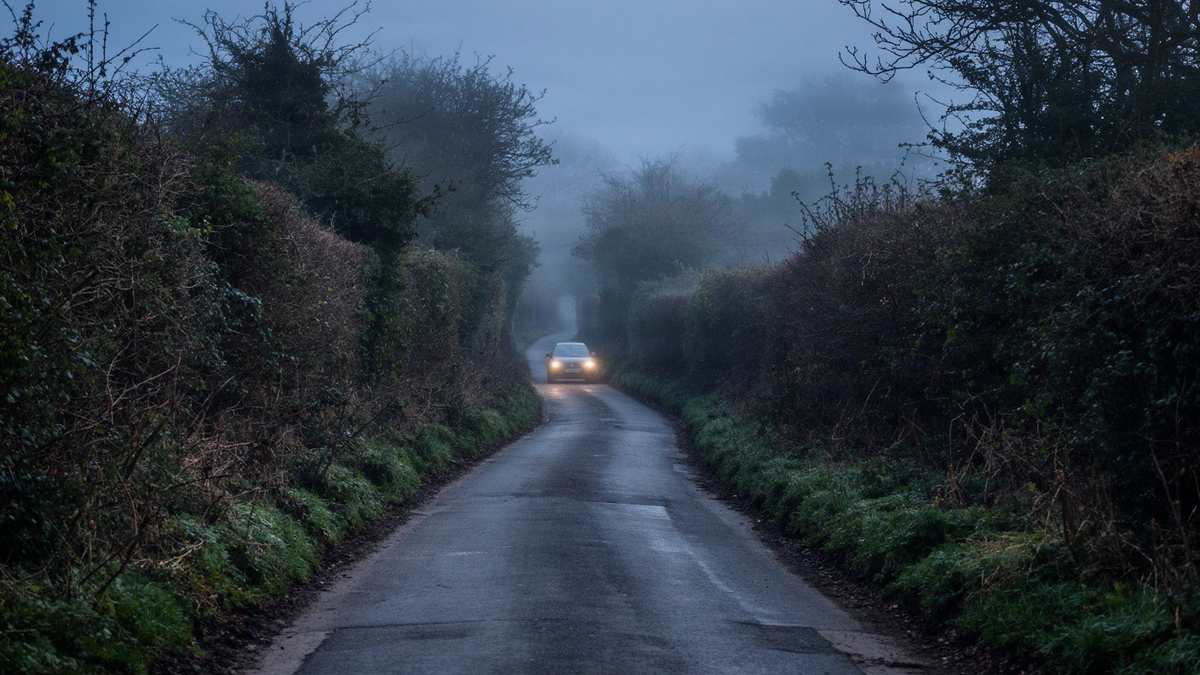
The clocks went back at 2am on 25 October, according to GOV.UK, which means the drive home from work or a lesson is now in the dark. It is a good week to get the lighting rules straight. They come up in the theory test a lot, and the fog light rule in particular is one that plenty of qualified drivers get wrong.
When you must have lights on
Rule 113 of the Highway Code sets out the basics. Sidelights and rear number plate lights must be on between sunset and sunrise. Headlights must be on at night, except on roads with lit street lights. You must also use headlights when visibility is seriously reduced.
Watch the definition of night, because it is a favourite theory question. The Highway Code defines it as the period between half an hour after sunset and half an hour before sunrise. So there is a short window after sunset where sidelights are required but headlights are not yet.
In practice, do not split hairs. Rule 115 says use dipped headlights at night in built-up areas and in dull daytime weather, so other people can see you. Being seen is half of what lights are for.
The 100 metre rule
Rule 226 gives the figure to remember: you MUST use headlights when visibility is seriously reduced, generally when you cannot see more than 100 metres (328 feet). The same rule says you may also use front or rear fog lights at that point. If you are struggling to picture it, it is roughly the length of a football pitch.
Fog lights: on when you need them, off when you do not
This is the rule people break most. Rule 236 says you MUST NOT use front or rear fog lights unless visibility is seriously reduced, and you MUST switch them off when visibility improves. The reasoning is simple: a rear fog light is bright enough to dazzle the driver behind you, and it can hide your brake lights. In light drizzle or a bit of mist, that makes you harder to read, not easier to see.
My advice for lessons: find the fog light switch now, in daylight, and learn the dashboard symbol. Then make switching it off part of the same thought as switching it on. Most drivers who leave them on simply forgot they were there.
Driving in fog
The fog rules in Rules 234 and 235 are worth reading in full, but these are the ones that matter most. Check your mirrors and slow down before you enter fog. A Fog sign with a clear road ahead still means trouble, because fog can be patchy and thick fog can appear suddenly. Keep a safe gap, because following the rear lights of the car in front gives you a false sense of security. And be able to stop within the distance you can see clearly, which is hardest to judge on motorways and dual carriageways.
At a junction in fog, stop in the right place, wind the window down if it helps, listen, and then go decisively once it is safe. The newer hazard perception clips include fog and night driving, which we covered in our post on the night, rain and fog clips.
Dazzle and flashing headlights
Rule 114 says you must not use lights in a way that dazzles other road users. Rule 115 adds that you should keep your headlights dipped when overtaking until you are level with the other vehicle, and that if oncoming lights dazzle you, slow down and stop if necessary.
Flashing your headlights has one meaning in the Highway Code. Rule 110 says only flash them to let other road users know you are there. Rule 111 says never assume a flash from someone else means you can go. In real life people flash to say thank you, go ahead or get out of the way. The theory test only accepts one answer.
The horn: two times you cannot use it
Rule 112 says the horn is only for when you are moving and need to warn someone you are there. Never use it aggressively. You must not use it while stationary on the road, or when driving in a built-up area between 11.30pm and 7am, unless another road user poses a danger. Those two times, 11.30pm and 7am, turn up in theory questions often enough to be worth learning by heart.
Darker evenings also mean longer stopping distances on wet roads. If you want a refresher, our stopping distances guide has the numbers and an easy way to remember them.
If you want to drill these until they are automatic, Theory Test Passed has the full DVSA licensed question bank and hazard perception clips. Start free at theorytestpassed.co.uk.