Ring Road Sign Meaning, Plus What Every Direction Sign Colour Tells You
The ring road sign is a white R on green with a yellow border. Here is what it means, and how blue, green, white, brown and yellow direction signs work.

"Ring road sign" was one of the fastest rising theory test searches in the UK this past week, and it is easy to see why. The sign is a white capital R in a box. Nothing on it explains itself, so you either know it or you guess. It is also a neat way into a topic the theory test likes more than people expect: what the colour of a direction sign tells you before you have read a word on it.
What the ring road sign means
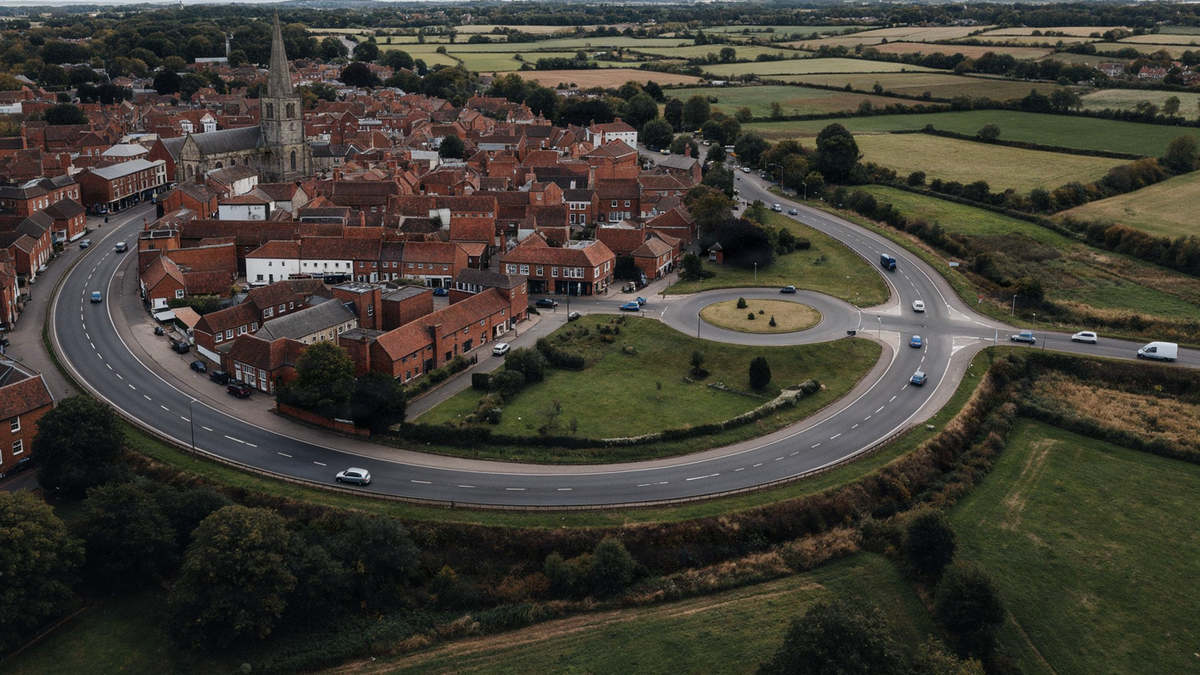
The sign is a white capital R on a green background with a yellow border. In the Highway Code traffic signs section its caption is "Primary route forming part of a ring road". A ring road loops around a town or city centre, so traffic can get from one side to the other without going through the middle.
You will see the R on its own as a reminder that you are on the loop, and you will see "Ring road" written on the arms of bigger junction signs. Follow it and you stay on the ring. In my experience it is often the quicker way round a busy town even when it looks longer on the map, because you skip the centre's lights, crossings and bus lanes. Ring roads also tend to be a chain of roundabouts, so it is worth being sure of how to signal and pick lanes at roundabouts.
Green signs: primary routes
Green signs with yellow route numbers mark primary routes, the main A roads between towns and cities. The Highway Code points out a few details on them that learners tend to skim past.
A blue panel on a green sign means a motorway starts at the junction ahead. A motorway shown in brackets, such as (M1), can also be reached along the route shown, just not straight away. A white panel shows local or non-primary routes leaving the junction, and a brown panel points to a tourist attraction. An aircraft symbol shows the way to an airport.
Blue signs: motorways
Blue direction signs belong to motorways. On the approach to a junction the junction number sits on a black background. Arrows pointing down mean get in lane, and the Highway Code notes that the left-hand lane then leads somewhere different from the other lanes. After a junction you get a route confirmation sign listing the places ahead. If you are wondering whether you can practise on these roads yet, our guide to learner drivers on the motorway has the rules.
Here is where people get muddled. Blue also turns up on ordinary local signs. On a local route sign, a route number on a blue background shows the direction to a motorway, and a route number on a green background shows the direction to a primary route. A small blue patch on a white sign is pointing you towards a motorway. It does not mean you are on one.
One more trap. These colour rules are for rectangular direction signs. A blue circle is a different family altogether and gives an order, like turn left. Shape comes first; our piece on the road signs learners most often get wrong covers how shapes work.
White signs with black borders: local routes
White signs with a black border are used on non-primary and local roads, which is most of what you drive on in towns and on smaller country roads. A green panel on one of these means the primary route starts at the junction ahead.
Brown and yellow signs
Brown signs point to places to visit: tourist attractions, picnic sites, camping and caravan sites, ancient monuments. They help you find somewhere. They do not tell you to do anything.
Yellow signs mark diversions. The Highway Code shows four black shapes on yellow (a square, a triangle, a diamond and a circle) used for emergency diversion routes for motorway and other main road traffic. If a motorway shuts, you pick up one symbol and follow that same shape until it brings you back. A yellow sign with a place name on it is a diversion route sign.
How this comes up in the theory test
Direction sign questions usually show a sign and ask what it means, or ask what a colour tells you. The ring road R is a favourite precisely because it gives nothing away. If you want one line to remember: blue for motorways, green for main roads, white for local roads, brown for places to visit, yellow for diversions. Get the type of sign from its colour and you have already ruled out most of the wrong answers.
A habit that works better than staring at a page of signs: next time you are a passenger, name the type of road from the sign colour before you read the words. It takes two seconds and it sticks.
Start free at theorytestpassed.co.uk.