Overtaking and Undertaking: What the Highway Code Actually Allows
Is undertaking illegal? The Highway Code allows passing on the left in two specific situations. Here is what Rules 162 to 169 and 268 say, including passing distances for cyclists and horse riders.

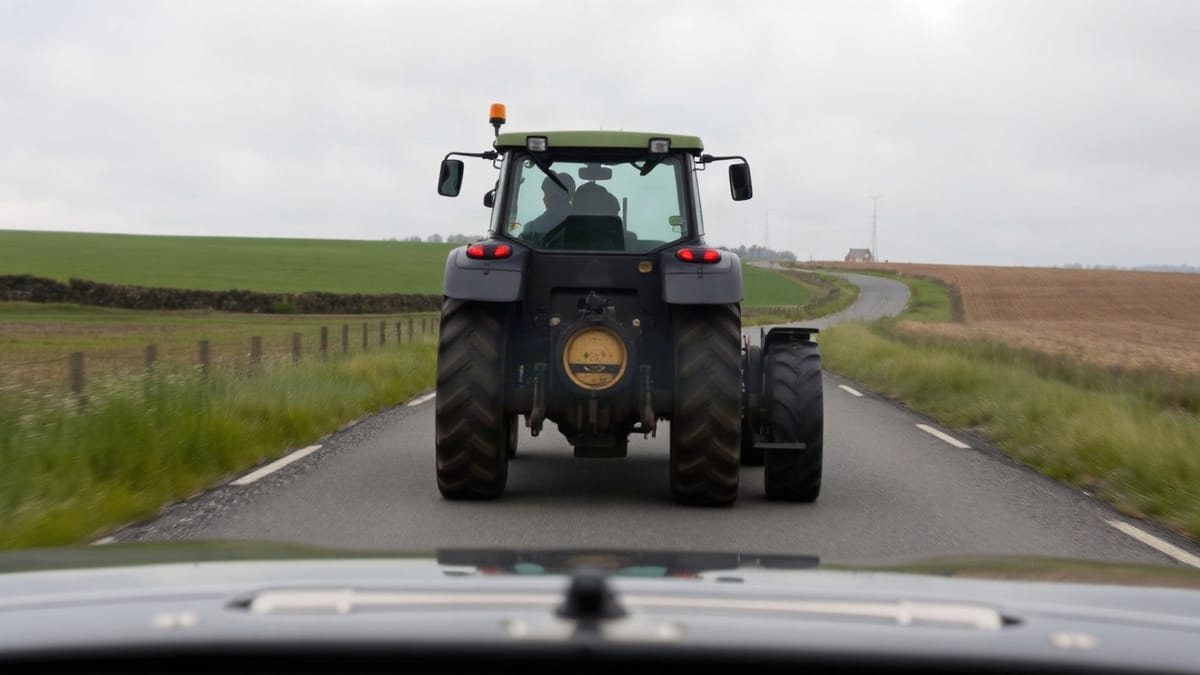
"Highway code undertaking" was one of the fastest rising UK searches around the Highway Code this week, and I understand the confusion. Ask ten drivers whether undertaking is legal and you will get everything from "always illegal" to "fine in traffic". The Highway Code never actually uses the word. It talks about passing or overtaking on the left, and it is clearer than most people think. Here is what the overtaking rules (162 to 169) and the motorway rules say.
The default: overtake on the right
Before you overtake, Rule 162 asks you to check that the road is clear ahead, that nobody behind is already beginning to overtake you, and that there is a gap in front to move back into. Rule 163 adds the how: do not get too close to the vehicle you are passing, use your mirrors, signal when it is safe, move quickly past and do not cut in. Rule 267 puts the motorway version bluntly: overtake only on the right.
When passing on the left is allowed
There are two everyday situations where Rule 163 lets you pass on the left. The first is when the vehicle in front is signalling to turn right and there is room to go past on its left. The second is in queues: if traffic is moving slowly and the queue on your right is moving more slowly than yours, you may pass on the left. The same rule tells you to stay in your lane in queues, so this is about your lane happening to move faster, not about switching lanes to get ahead.
Motorways work the same way. Rule 268 says do not overtake on the left or move to a lane on your left to overtake. But in congested conditions, where lanes are moving at similar speeds and the left lane is flowing a bit quicker, you may keep up with the traffic in your lane even if that means passing traffic on your right. Weaving between lanes to get past is out.
So here is the line that matters. Staying in a lane that happens to be quicker is allowed. Dropping into the left lane to nip past someone and then pulling back out is the undertaking the Code warns against. My rule of thumb: if you had to change lane to do it, it probably counts.
When you must not overtake at all
Rule 165 lists places where you MUST NOT overtake, including where it would mean crossing double white lines, entering a reserved bus or cycle lane, and after a No Overtaking sign. Rule 166 is about doubt: do not overtake if you cannot see far enough ahead, such as on a bend, near a bridge or over the brow of a hill.
Rule 167 covers other conflicts, including junctions, places where the road narrows, school crossing patrols, level crossings, and when the vehicle ahead is signalling to turn. At pedestrian crossings Rule 191 is strict: you MUST NOT overtake the moving vehicle nearest the crossing, or one that has stopped to let people cross.
Passing cyclists, horse riders and people walking
Rule 163 gives actual numbers here. Leave at least 1.5 metres when passing cyclists at speeds up to 30mph. Pass horse riders at under 10mph and allow at least 2 metres. Give at least 2 metres and keep to a low speed when passing a pedestrian walking in the road. If you cannot do that safely, wait behind. We go further into cyclist spacing in the Dutch Reach and close pass rules.
Rule 163 also says cyclists may pass slower moving or stationary traffic on their right or left. In other words, a cyclist filtering up the inside of your queue is allowed to be there. That is why the mirror check before a left turn is not optional.
When you are the one being overtaken
Rule 168 says keep a steady course and speed, slowing down if necessary, and never obstruct a driver who wants to pass. Speeding up when someone pulls out to pass you is dangerous, however annoying their driving is. Rule 169 asks slower drivers not to hold up a long queue of traffic.
Stuck behind a lorry? Rule 164 says drop back to get a better view, make sure you have room to finish the move, and do not assume you can follow a vehicle ahead that is overtaking. That last one is a real trap: the car in front had a gap, but it may close before you get there.
What to drill before your test
If you are revising this section, I would focus on the two situations where passing on the left is fine, the passing distances for cyclists, horse riders and pedestrians, and how to behave when someone overtakes you. Those rules have specific answers, which makes them good multiple choice material. Signs play a part too, so pair this with our posts on road signs and on bus lanes, cycle lanes and tram signs.
You can practise overtaking and vulnerable road user questions with Theory Test Passed on the website, or on the go with the iPhone app and Android app.